
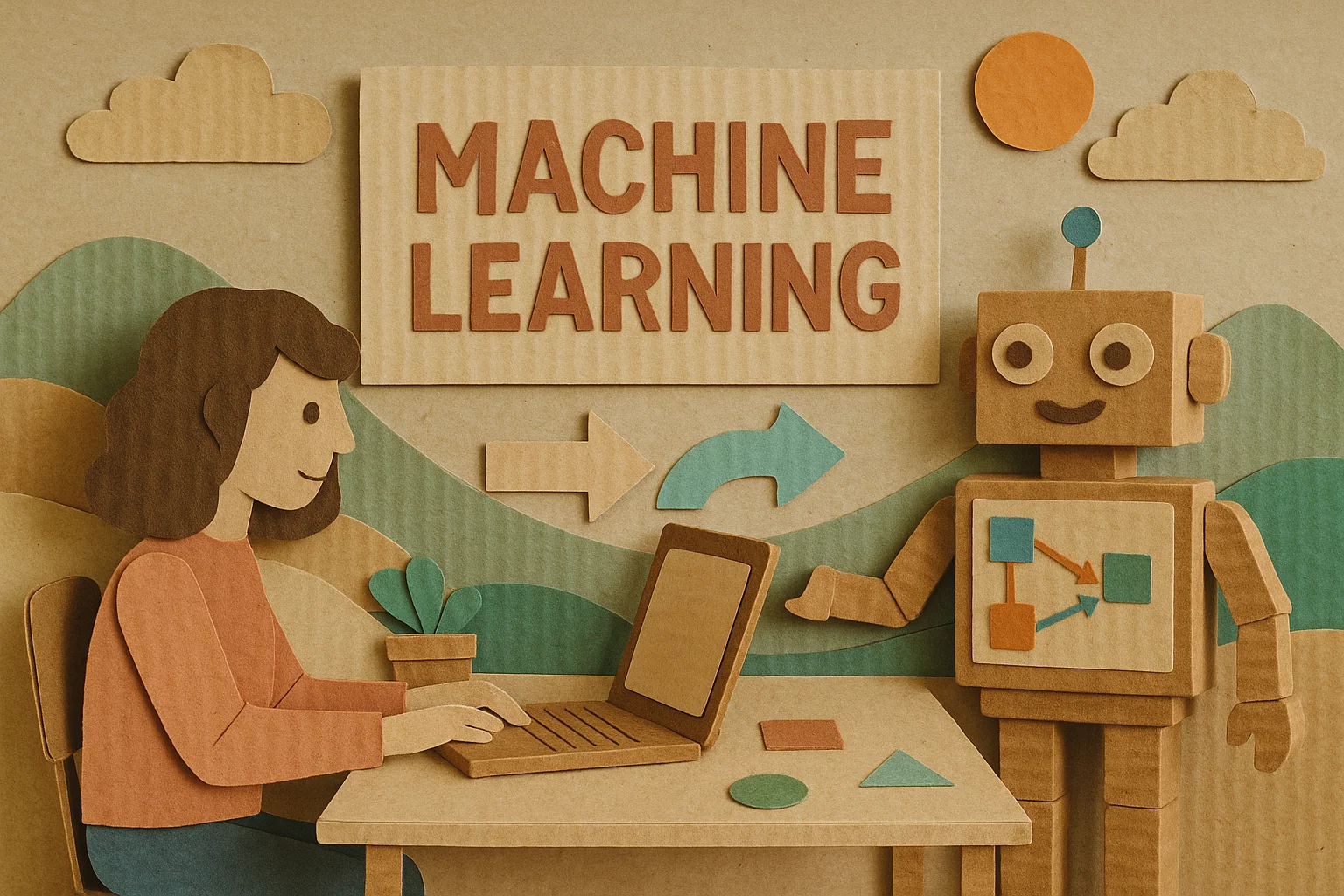
Machine Learning Revolution in the Business
Machine learning has moved from research laboratories to boardrooms worldwide. Businesses across Australia, the United States, China, and India and the world are discovering that machine learning isn’t just a competitive advantage as it’s becoming essential for survival in today’s data driven economy.
But many have questions as to how exactly are companies implementing these AI technologies? What challenges do they face, and what results are they achieving? In this blog lets explore real business implementations of machine learning, examining success stories, common strategies, and lessons learned across our key markets.
Whether you are a business owner considering Machine Learning (ML) adoption or simply curious about how AI is transforming commerce globally, these examples will show you the practical reality of machine learning in business today.
Affiliate Disclosure: This post may contain affiliate links, which means I may receive a commission if you click on a link and purchase something that I have recommended. This comes at no additional cost to you, but helps support this blog so I can continue providing valuable AI insights. I only recommend products I believe in. Thank you for your support!
Machine Learning Implementation Strategies
Before diving into specific examples, it’s important to understand the common approaches businesses take when implementing machine learning:
The Pilot Project Approach
Most successful companies start small with pilot projects that demonstrate clear value before scaling up. This reduces risk and builds internal confidence in AI technologies.
The Platform Strategy
Larger organizations often build internal ML platforms that multiple departments can use, creating economies of scale and standardizing approaches across the company.
The Partnership Model
Many businesses partner with AI specialists or cloud providers rather than building everything in-house, allowing them to access expertise they don’t possess internally.
Innovation and Scale
Many businesses have been early adopters of machine learning, with many pioneering applications that have since spread worldwide.
Netflix’s Personalization at Massive Scale
Netflix serves over 230 million subscribers globally, and machine learning powers virtually every aspect of their user experience. Their recommendation system is perhaps the most sophisticated consumer facing ML application in the world.
Implementation Details:
- Netflix uses collaborative filtering algorithms that analyse viewing patterns of similar users
- Content thumbnail personalisation shows different images to different users based on their preferences
- Viewing quality optimisation adjusts video streaming in real-time based on network conditions
- Content creation decisions are informed by ML analysis of viewer preferences
Business Impact: Netflix reports that their recommendation system drives over 80% of viewer engagement, saving the company approximately $1 billion annually in customer retention costs. The algorithms have become so central to their business that Netflix considers them a core competitive advantage.
Implementation Challenges:
- Managing computational costs at scale (Netflix processes over 500 billion events daily)
- Balancing personalisation with content discovery
- Handling the “cold start” problem for new users with no viewing history
Walmart’s Supply Chain Optimisation
Walmart, the world’s largest retailer, uses machine learning to optimise their massive supply chain operation spanning thousands of stores and distribution centers.
Implementation Strategy:
- Demand forecasting algorithms predict product needs at individual store levels
- Route optimisation ML reduces transportation costs and delivery times
- Inventory management systems automatically adjust stock levels based on predicted demand
- Price optimisation algorithms dynamically adjust prices based on competition and demand
Business Results: Walmart reports that ML driven supply chain improvements have reduced logistics costs by 15% while improving product availability by 10%. Their same-day delivery service, powered by ML route optimisation, now reaches 87% of US households.
John Deere’s Precision Agriculture
The agricultural equipment manufacturer has transformed from a traditional machinery company into a data-driven precision agriculture leader through extensive ML implementation.
ML Applications:
- Computer vision systems identify crop diseases and pest infestations from drone imagery
- Predictive maintenance algorithms reduce equipment downtime
- Yield prediction models help farmers optimise planting strategies
- Automated machinery adjusts operations in real-time based on soil and crop conditions
Business Transformation: John Deere’s ML initiatives have created new revenue streams through subscription based data services, while helping farmers increase yields by an average of 12% while reducing input costs by 8%.
Manufacturing and Urban Intelligence
Chinese businesses have excelled at implementing machine learning in manufacturing and smart city applications, often at unprecedented scales.
Alibaba’s E-commerce and Cloud AI
Alibaba Group operates one of the world’s largest e-commerce ecosystems and has built extensive ML capabilities to support their business operations.
Core ML Implementations:
- Real-time fraud detection processes millions of transactions daily
- Intelligent customer service chatbots handle 95% of customer inquiries
- Dynamic pricing algorithms optimise prices across millions of products
- Logistics optimisation manages the world’s largest package delivery network
Innovative Applications: During China’s Singles’ Day shopping festival, Alibaba’s ML systems process over 500,000 orders per second while managing inventory, pricing, and logistics in real-time. Their AI-powered customer service handles conversation volumes equivalent to 85,000 human agents.
Business Impact: Machine learning drives approximately 40% of Alibaba’s gross merchandise value, with their recommendation systems generating over $50 billion in annual sales.
BYD’s Smart Manufacturing Revolution
Chinese automaker BYD has implemented comprehensive ML systems across their electric vehicle and battery manufacturing operations.
Manufacturing ML Systems:
- Computer vision quality control systems inspect components with 99.9% accuracy
- Predictive maintenance reduces production line downtime by 30%
- Energy optimisation algorithms reduce factory power consumption by 20%
- Supply chain ML predicts component needs and optimises procurement
Innovation Results: BYD’s ML-enhanced manufacturing has enabled them to reduce production costs by 25% while improving quality metrics. They have become the world’s largest electric vehicle manufacturer partly due to these efficiency gains.
Ping An’s Financial Services Transformation
Ping An Insurance has evolved into a comprehensive financial technology company through aggressive ML adoption across all business lines.
Comprehensive ML Integration:
- AI-powered underwriting processes insurance applications in minutes instead of weeks
- Medical AI assists doctors in diagnosis and treatment recommendations
- Fraud detection systems analyse claims in real-time
- Investment algorithms manage over $200 billion in assets
Revolutionary Impact: Ping An’s “Good Doctor” AI platform serves over 400 million users, providing medical consultations and health management services. Their ML systems have reduced insurance processing costs by 60% while improving customer satisfaction scores by 35%.
Australia’s Environmental and Resource Intelligence
Australian businesses have pioneered ML applications in environmental management, mining, and agriculture, leveraging the country’s vast natural resources and environmental challenges.
Rio Tinto’s Autonomous Mining Operations
The global mining giant has implemented one of the world’s most comprehensive autonomous operations systems in Australia’s Pilbara region.
Autonomous Operations:
- Self-driving trucks operate 24/7 in remote mining sites
- Automated trains transport ore across hundreds of kilometers
- Predictive maintenance prevents equipment failures before they occur
- Ore quality optimisation maximises the value of extracted materials
Operational Excellence: Rio Tinto’s autonomous truck fleet has operated for over 10 years, covering more than 5 million kilometers with significantly better safety records than human-operated vehicles. The system has reduced operational costs by 15% while increasing productivity by 12%.
Commonwealth Bank’s Intelligent Banking
Australia’s largest bank, the Commonwealth Bank (CBA) has implemented comprehensive ML systems to enhance customer experience and operational efficiency.
Banking AI Applications:
- Real-time fraud detection protects customers from financial crimes
- Credit risk assessment provides faster loan decisions
- Personalized financial advice helps customers manage money better
- Chatbot assistance handles routine banking inquiries
Customer Impact: The bank’s ML systems prevent over $500 million in fraud annually while processing loan applications 70% faster than traditional methods. Customer satisfaction with digital services has increased by 40% since ML implementation.
Woolworths’s Retail Optimization
Australia’s largest supermarket chain uses machine learning to optimise operations across over 1,000 stores.
Retail ML Systems:
- Demand forecasting reduces food waste by predicting exactly what customers will buy
- Dynamic pricing optimises margins while remaining competitive
- Staff scheduling algorithms ensure optimal customer service levels
- Supply chain optimisation reduces costs and ensures product availability
Sustainability Results: Woolworths’ ML-driven demand forecasting has reduced food waste by 30%, supporting both environmental goals and profitability. The system prevents approximately 50,000 tons of food waste annually.
Financial Inclusion and Healthcare Innovation
Indian businesses have excelled at using machine learning to solve unique challenges related to financial inclusion, healthcare access, and serving diverse populations.
Paytm of India’s Digital Payments Revolution
India’s largest digital payments platform has built sophisticated ML systems to serve over 450 million users, many of whom are new to digital financial services.
Financial ML Innovation:
- Risk assessment algorithms evaluate creditworthiness using alternative data sources
- Fraud prevention systems protect users in real-time
- Personalised financial products recommendations increase user engagement
- Language processing handles transactions in multiple Indian languages
Inclusion Impact: Paytm’s ML systems have enabled financial services for over 100 million previously unbanked Indians. Their alternative credit scoring has disbursed over $2 billion in loans to small businesses and individuals without traditional credit histories.
Apollo Hospitals’s AI-Powered Healthcare
India’s largest hospital network has implemented extensive ML systems to improve healthcare delivery across urban and rural areas.
Healthcare AI Applications:
- Medical imaging AI assists radiologists in diagnosis
- Predictive analytics identify patients at risk for complications
- Treatment optimisation algorithms recommend personalized care plans
- Telemedicine AI extends specialist expertise to remote areas
Healthcare Access: Apollo’s AI systems have enabled specialist consultations for over 50 million patients in remote areas. Their diabetic retinopathy screening AI has prevented blindness in thousands of patients who wouldn’t otherwise have access to eye specialists.
Reliance Jio’s Telecommunications Intelligence
India’s largest telecommunications provider uses ML to manage one of the world’s most complex mobile networks serving over 450 million plus users.
Network ML Applications:
- Traffic prediction optimises network capacity in real-time
- Predictive maintenance prevents network outages
- Customer service AI handles millions of inquiries daily
- Fraud detection protects against SIM card and service abuse
Scale Achievement: Jio’s ML systems manage data traffic that would require thousands of human analysts, while maintaining network quality despite explosive growth in data usage. Their AI-powered network optimisation has reduced operational costs by 40%.
Common Implementation Patterns
Across all markets, successful ML implementations share several characteristics:
Start with Clear Business Problems
The most successful companies begin with specific business challenges rather than trying to implement AI for its own sake. They identify measurable problems that ML can solve.
Invest in Data Infrastructure
Companies that succeed long-term invest heavily in data collection, storage, and quality management systems before building ML models.
Build Internal Capabilities
While partnerships are important, companies that develop internal ML expertise achieve better long-term results and competitive advantages.
Focus on Continuous Improvement
Machine learning is not a “set it and forget it” technology. Successful implementations include processes for continuous model monitoring and improvement.
Challenges and Solutions
Data Quality and Availability
Challenge: Many businesses discover their data isn’t suitable for ML applications. Solution: Invest in data cleaning and collection processes before building models.
Skills Shortage
Challenge: Finding qualified ML talent is difficult and expensive globally. Solution: Combine training existing employees with strategic partnerships and cloud-based ML services.
Integration Complexity
Challenge: Integrating ML systems with existing business processes can be complicated. Solution: Start with pilot projects and gradually expand, learning integration lessons at smaller scales.
ROI Measurement
Challenge: Measuring the business impact of ML can be difficult. Solution: Establish clear metrics and baseline measurements before implementation begins.
The Future of Business ML Implementation
Looking ahead, several trends are shaping how businesses implement machine learning:
Democratisation of AI
Low-code and no-code ML platforms are making AI accessible to businesses without extensive technical resources.
Edge Computing
More ML processing is moving closer to where data is generated, reducing latency and improving privacy.
Regulatory Compliance
Businesses are increasingly implementing “explainable AI” systems to meet regulatory requirements and build customer trust.
Sustainability Focus
Companies are using ML to optimise resource usage and reduce environmental impact, particularly in energy-intensive industries.
ML Implementation Journey
The examples from Australia, the United States, China, and India demonstrate that successful machine learning implementation isn’t about having the most advanced technology but it’s about solving real business problems with measurable results.
Whether you’re running a small business in Melbourne, a startup in Silicon Valley, a manufacturer in Shenzhen, or a service company in Mumbai, the key principles remain consistent, start with clear objectives, invest in quality data, build appropriate capabilities, and focus on continuous improvement.
Machine learning is no longer a luxury for tech giants. It’s becoming a necessity for businesses that want to remain competitive in an increasingly data driven world. The question isn’t whether your business should implement ML, but how quickly you can start learning from the successes and challenges of those who’ve gone before you.
Keywords: machine learning implementation, business AI adoption, ML success stories, enterprise machine learning, AI transformation, business intelligence, predictive analytics, automation strategies, digital transformation, ML ROI