
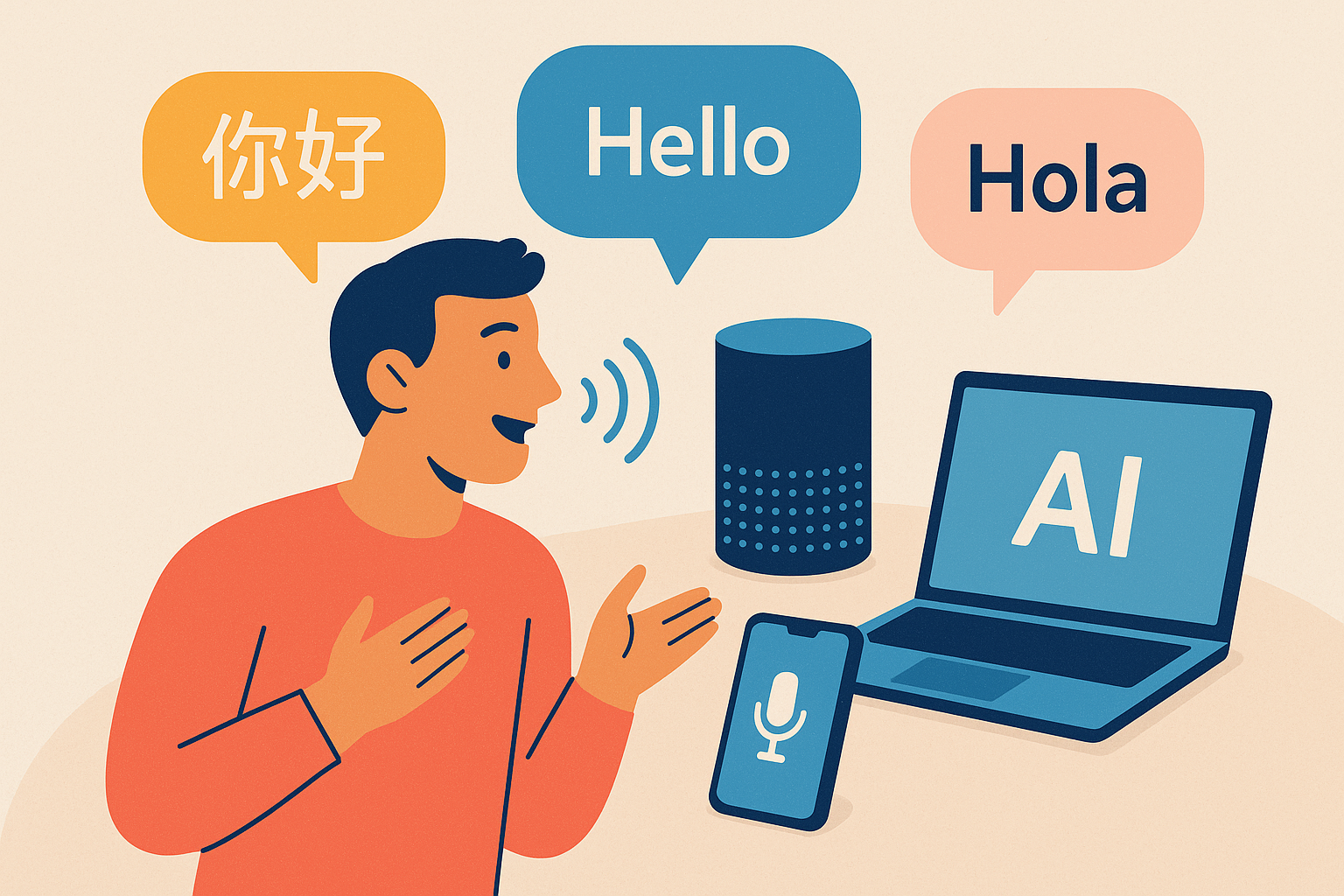
Natural Language Processing
Have you ever wondered how AI Understands Human Language? For example how Siri understands your accent when you speak, or how Google Translator can convert English to Mandarin in seconds? The answer lies in Natural Language Processing (NLP) process, one of the most fascinating branches of artificial intelligence that is revolutionising how we interact with technology.
Affiliate Disclosure: This post may contain affiliate links, which means I may receive a commission if you click on a link and purchase something that I have recommended. This comes at no additional cost to you, but helps support this blog so I can continue providing valuable AI insights. I only recommend products I believe in. Thank you for your support!
What is Natural Language Processing?
Natural Language Processing is the technology that enables computers to understand, interpret, and respond to human language in a meaningful way. Think of it as teaching machines to “speak human” – whether that’s English, Hindi, Mandarin, or any of the world’s 7,000 languages.
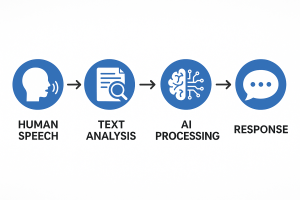
Unlike traditional computer programming where instructions must be precise and structured, NLP allows machines to work with the messy, complex, and often ambiguous nature of human communication. It’s the difference between typing specific commands into a computer and having a natural conversation with your smartphone.
Chatbots and Voice Assistants
How Chatbots Process Messages
When you type a question into a customer service chatbot, several complex processes happen in milliseconds:
- Text Analysis: The system breaks down your sentence into individual words and phrases
- Intent Recognition: It identifies what you’re actually asking for
- Context Understanding: It considers previous messages to understand the full conversation
- Response Generation: It creates an appropriate reply based on its training
Modern chatbots like ChatGPT, Claude, and customer service bots use sophisticated neural networks trained on millions of conversations. They don’t just match keywords – they genuinely understand context, emotion, and nuance.
Voice Assistants: Speaking and Listening
Voice assistants like Alexa, Google Assistant, and Siri combine several NLP technologies:
- Speech Recognition: Converting your spoken words into text
- Natural Language Understanding: Figuring out what you mean
- Natural Language Generation: Creating a human-like response
- Text-to-Speech: Converting the response back into spoken words
The remarkable thing is how these systems handle different accents, background noise, and casual speech patterns. An Australian saying “G’day, what’s the weather like?” and an American asking “Hey, how’s it looking outside?” both receive accurate weather updates. Isnt that turly amazing?
Language Challenges
The Complexity of Multilingual AI
Building NLP systems that work across different markets presents unique challenges:
United States: While primarily English speaking, the US market includes numerous dialects, slang variations, and immigrant communities speaking dozens of languages. NLP systems must handle everything from Southern drawls to New York accents, plus Spanish, Mandarin, and other languages.
Australia: Australian English includes unique vocabulary (“thongs” for flip-flops, “arvo” for afternoon) and cultural references that can confuse AI systems trained primarily on American or British English.
India: Perhaps the most linguistically complex market, with 22 official languages and hundreds of dialects. Indians often code switch between languages mid-sentence (called “Hinglish” for Hindi-English mixing), creating fascinating challenges for NLP systems.
China: Mandarin Chinese presents unique challenges with its tonal nature, character-based writing system, and regional variations. Additionally, internet slang and abbreviated expressions on platforms like WeChat require constant system updates.
Cultural Context Matters
NLP isn’t just about language – it’s about culture. A system that works perfectly in London might completely misunderstand a conversation in Mumbai. For example:
- Politeness levels vary dramatically between cultures
- Humour and sarcasm translate poorly
- Business communication styles differ significantly
- Time references and calendar systems vary
Transforming Customer Service
The Customer Service Revolution
NLP is fundamentally changing how businesses interact with customers worldwide:
24/7 Availability: Unlike human agents, AI-powered customer service never sleeps. A customer in Sydney can get help at 3 AM, while someone in New York receives assistance during their lunch break.
Instant Response Times: Modern NLP systems can handle thousands of conversations simultaneously, eliminating lengthy wait times that frustrate customers.
Consistent Quality: Human agents have good days and bad days. AI systems provide consistent, accurate responses regardless of the time or volume of enquiries.
Cost Efficiency: Businesses can dramatically reduce customer service costs while improving service quality – a win-win situation.
Real-World Applications
Banking: Banks use NLP chatbots to handle routine enquiries like balance checks, transaction history, and simple transfers. More complex issues are seamlessly transferred to human agents.
E-commerce: Online retailers employ NLP to help customers find products, track orders, and resolve delivery issues. Amazon’s customer service bot handles millions of interactions daily.
Healthcare: Telehealth platforms use NLP to help patients describe symptoms, schedule appointments, and receive basic medical advice.
Travel: Airlines and booking platforms use multilingual NLP systems to handle reservations, flight changes, and customer complaints across different time zones and languages.
The Technology Stack Behind NLP
Machine Learning Models
Modern NLP relies on sophisticated machine learning models:
- Transformer Models: Like GPT and BERT, these understand context and relationships between words
- Neural Networks: These mimic human brain functions to process language patterns
- Large Language Models: Trained on vast amounts of text data to understand human communication
Training Data Challenges
Creating effective NLP systems requires enormous amounts of training data:
- Text Corpora: Millions of books, articles, and conversations
- Multilingual Datasets: Content in dozens of languages
- Cultural Context: Understanding regional differences and customs
- Continuous Learning: Regular updates to handle new slang and expressions
Looking Ahead: The Future of NLP
Emerging Trends
Emotional Intelligence: Next-generation NLP systems will better understand emotions, sarcasm, and subtle communication cues.
Multimodal Understanding: Combining text, voice, images, and video for richer communication experiences.
Real-time Translation: Breaking down language barriers for global business and personal communication.
Personalisation: NLP systems that adapt to individual communication styles and preferences.
Challenges Ahead
Despite remarkable progress, NLP still faces significant challenges:
- Bias and Fairness: Ensuring AI systems don’t discriminate against particular groups or dialects
- Privacy Concerns: Protecting user data while improving system performance
- Cultural Sensitivity: Avoiding misunderstandings that could offend users
- Technical Limitations: Handling complex queries that require deep reasoning
Getting Started with NLP
Whether you’re a business owner or simply curious about the technology, here are ways to explore NLP:
- Try Different Chatbots: Experiment with various customer service bots to see how they handle different types of questions
- Voice Assistant Practice: Test voice assistants with different accents and speaking styles
- Language Learning Apps: Many use NLP to provide personalised language instruction
- Business Applications: Consider how NLP could improve your organisation’s customer service
Natural Language Processing, way forward!
Natural Language Processing represents one of AI’s most practical and immediately beneficial applications. From the chatbot that helps you track a package to the voice assistant that sets your morning alarm, NLP technology is already woven into our daily lives.
As we move forward, the gap between human and machine communication continues to narrow. The future promises even more natural, intuitive, and helpful interactions between humans and AI systems – breaking down language barriers and making technology truly accessible to everyone, regardless of their native language or cultural background.
The conversation between humans and machines has only just begun, and it’s going to be fascinating to see where it leads us next.
Don’t forget to subscribe for more insights into the world of artificial intelligence.
Keywords: Natural Language Processing, NLP, chatbots, voice assistants, AI customer service, machine learning, artificial intelligence, multilingual AI, global markets, speech recognition